Successful onion farming starts long before harvest.
From selecting the right seed and preparing the field to managing irrigation, spacing and crop nutrition, every stage of production can affect the final yield and quality of your onions.
For farmers looking to improve onion production, direct sowing combined with drip irrigation can offer a practical approach to establishing a healthy and uniform crop.
Start with the Right Onion Seed
Choosing a suitable onion variety is one of the first decisions a farmer needs to make.
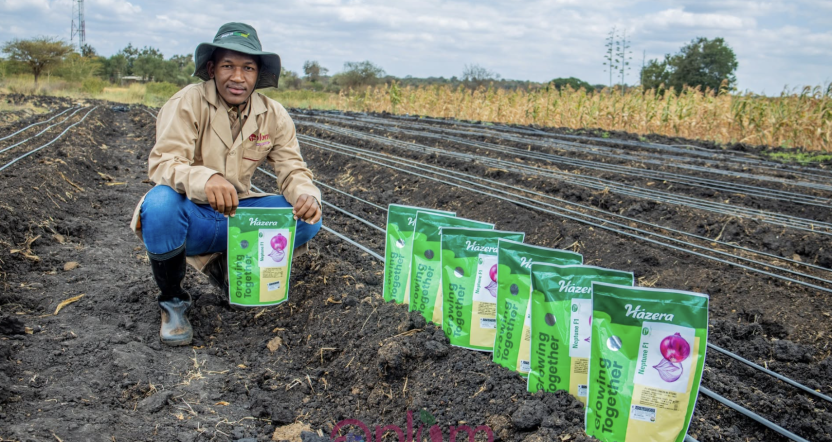
Neptune F1, from Hazera, is a red onion hybrid that can be grown by farmers looking for uniform bulbs, good market appeal and strong yield potential.
The variety can also be established through direct sowing, making it suitable for farmers using a well-managed drip irrigation system.
However, good seed alone does not guarantee a successful harvest. Proper crop establishment and management remain essential.
Direct-Sow Onion Seeds Along the Drip Line
Traditionally, onions are often established in a nursery before seedlings are transplanted into the main field. Direct sowing provides another option.
With direct sowing, onion seed is planted directly in the prepared field alongside the drip lines. This eliminates the nursery and transplanting stages, potentially reducing labour requirements and avoiding transplanting stress.
In a properly prepared field, the drip line provides moisture close to the developing seed and seedlings, supporting uniform establishment.
Getting Onion Seed Spacing and Planting Depth Right
Proper planting is important for achieving a uniform onion crop.
Onion seeds should generally be planted shallowly, as planting too deeply can affect germination. The soil should have adequate moisture without becoming waterlogged.
Once seedlings have emerged, thinning may be necessary to achieve the appropriate spacing and avoid excessive competition between plants.
Farmers should follow the seed manufacturer’s recommendations for the specific variety, particularly regarding planting depth, spacing and target plant population.
Use Drip Irrigation for Better Water Management
Water management is one of the most important aspects of successful onion farming.
Onions have relatively shallow root systems, making consistent moisture important during crop establishment and bulb development.
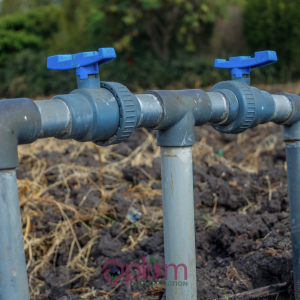
Drip irrigation delivers water close to the root zone, helping farmers manage irrigation more precisely while reducing unnecessary water loss.
The amount and frequency of irrigation should be adjusted according to the crop’s growth stage, soil type and prevailing weather conditions.
Avoid both prolonged moisture stress and excessive watering, as poor water management can affect bulb development and increase the risk of certain diseases.
Don’t Overlook Crop Nutrition
Healthy onion growth also depends on adequate nutrition.
Before planting, farmers should assess soil fertility and, where possible, carry out a soil test to determine the nutrient requirements of the field.
A suitable fertiliser and crop nutrition programme can then be developed based on the soil condition, variety and growth stage. Proper nutrition supports healthy vegetative growth and subsequent bulb development.
Rather than applying fertiliser based on guesswork, farmers should seek professional agronomic advice on the right products, rates and application timing.
Monitor the Crop from Planting to Harvest
Regular field monitoring allows farmers to identify problems before they significantly affect the crop.
Check the field regularly for:
- Pests and diseases
- Poor germination or uneven plant growth
- Weed competition
- Irrigation problems
- Nutrient deficiencies
- Signs of water stress
Early identification allows farmers to take corrective action before problems become more difficult and costly to manage.
Why Combine Neptune F1 with Drip Irrigation?
A good seed variety and an efficient irrigation system can work together to give farmers better control over crop establishment and management.
Direct-sowing Neptune F1 onion seed alongside properly installed drip lines can simplify crop establishment while ensuring that irrigation is delivered close to the developing plants.
The approach demonstrated by the Plum field team shows farmers how the seed and irrigation system can be integrated from the beginning of the crop cycle.
Plan Your Next Onion Crop with Plum Agrovet
Successful onion farming requires more than planting seed and waiting for harvest.
The right seed, proper field preparation, effective irrigation, good nutrition and consistent crop monitoring all contribute to a productive onion crop.
At Plum Agrovet, our team supports farmers with quality agricultural inputs, irrigation solutions and practical field guidance to help them make informed decisions throughout the production cycle.
If you’re planning your next onion crop, talk to the Plum Agrovet team about onion seed, drip irrigation and the right inputs for your farm.
Every drop counts. Every farm thrives.